
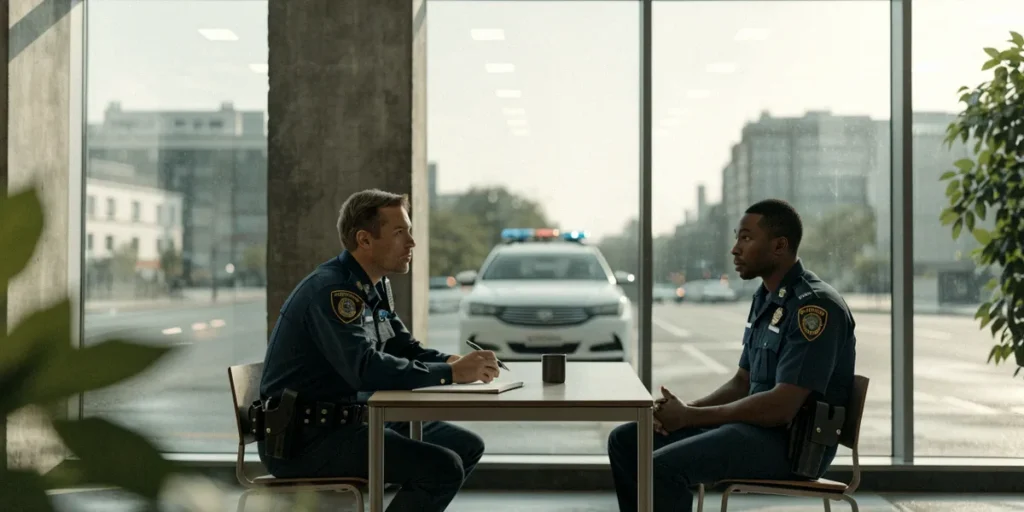
Real Policing versus TV Policing: What Dramas Get Wrong
We were halfway through a Sunday-night detective drama when it happened: a detective sergeant strolled into a suspect’s living room, switched on a lamp, and started questioning him without a caution, a solicitor, or so much as a notebook. We shouted at the screen. Then we poured another tea and kept watching, because that is the strange contract between crime fiction fans and the shows we love. We know it is nonsense, and we cannot look away. So this week we are pulling apart the biggest gaps between real policing in the UK and the version served up on television — and asking what writers, and fans of buddy cop films, can learn from the truth.
The Speed of Investigations: TV Time vs Real Time
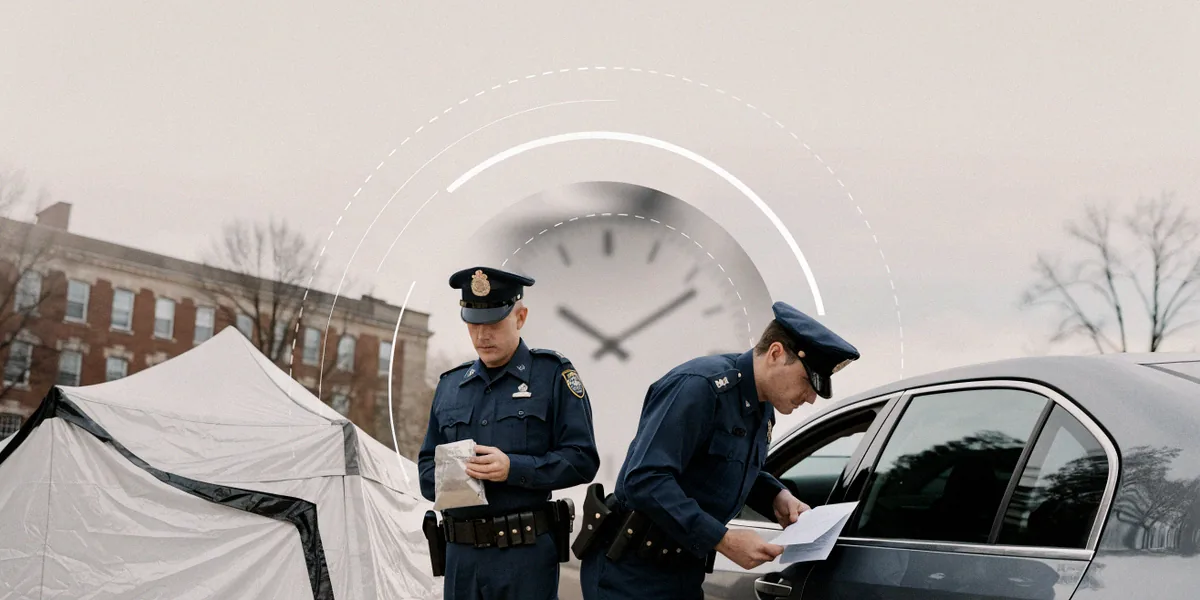
Television runs on compression. A murder is discovered in act one, the suspect is in an interview room by act four, and the confession lands with ten minutes to spare. Real investigations do not work to a running time, and the difference matters more than most viewers realise.
Why TV detectives solve cases in days
Screenwriters compress because a six-week investigation makes for terrible telly. But the gap between fiction and fact shapes audience expectations in a real way. When a case drags on in the news, viewers who have absorbed hundreds of hours of crime drama quietly wonder why the police are not simply doing what Vera or Morse would do. The Stephen Lawrence murder case is the clearest example we can point to. Stephen was killed in an unprovoked racist attack in Eltham, south London, in April 1993. It took until 2012 — nineteen years — for two of his killers to be convicted. The Macpherson inquiry that followed the case concluded that the Metropolitan Police was institutionally racist, and it reshaped how UK forces handle hate crime and family liaison. No sixty-minute episode could carry that weight, and arguably none should try.
The reality of UK police budget cuts and backlogs
Since 2010, austerity has stripped tens of thousands of officers and staff from forces across England and Wales. The practical result is that investigations queue. Digital forensics backlogs stretch into months. Detectives carry caseloads that would make a TV DI faint. When a drama shows a single detective personally chasing every lead, interviewing every witness, and still making it home for dinner, we are watching a fantasy of resourcing, not policing.
Forensics and Technology: Glamour vs Reality
Here is where television stretches credibility furthest. The CSI-style fantasy of a DNA match in twenty minutes has never been true anywhere, and it is certainly not true in the UK.
DNA and fingerprint turnaround times in the UK
In England and Wales, most forensic analysis is commissioned through the Forensic Science Regulator’s accredited framework, and the vast majority of casework is outsourced to commercial providers. The Regulator exists precisely because forensic evidence must survive courtroom scrutiny, which is why nothing is instant. A straightforward DNA profile might be loaded to the National DNA Database within days, but confirming a match, interpreting mixed profiles, and producing a statement fit for court routinely takes weeks or months. Fingerprint identifications can be quicker, but they still pass through trained examiners rather than a magic screen. If you want a realistic screenwriting prompt, write the scene where the detective is told the result will be back in six weeks and has to build a case without it.
CCTV and ANPR: what really works
Automatic Number Plate Recognition and CCTV do genuine, valuable work — but not the way dramas depict. Coverage is patchy, cameras are often privately owned, footage is overwritten within weeks, and every retrieval requires legal grounds and paperwork. A detective “pulling up every camera in the city” in one montage is not how it happens.
Interrogation Rooms and Legal Rights: PACE vs TV Drama
This is the section that makes us shout loudest. British detective dramas routinely ignore the Police and Criminal Evidence Act 1984, known to everyone in the job as PACE, along with the Codes of Practice that sit beneath it.
The right to silence and caution
Before any questioning, a suspect must be cautioned: they have the right to remain silent, and anything they do say may be given in evidence. They have the right to free and independent legal advice, and questioning generally cannot proceed without a solicitor present unless the suspect explicitly declines one. Interviews are recorded, timed, and reviewed. The theatrical version — a detective leaning across a table, snarling, no solicitor in sight — would end a real case before it began.
Good cop, bad cop: a myth in UK policing
The classic routine belongs to American buddy cop films, not British interview rooms. In the UK, officers are trained in the PEACE interviewing model: Planning and preparation, Engage and explain, Account, Closure, Evaluate. Aggression contaminates evidence and hands the defence an easy win. If you want authenticity in your crime fiction, write the interview where nothing happens for forty minutes and the suspect’s account quietly contradicts itself.
Buddy Cop Dynamics: Real Partnerships vs Screen Chemistry
We adore Hot Fuzz. Edgar Wright’s send-up of buddy cop films is one of the sharpest British comedies of the century, and Line of Duty has given us some of the best interrogation scenes ever broadcast. But both trade on a partnership model that barely exists in real UK policing.
Why UK police rarely work in fixed pairs
Pairing policies vary by force and role, but the fixed, telepathic duo is largely a screen invention. Response teams are assigned by shift, skills, and demand. Detectives work within teams, hand over at shift end, and may not see the same colleague for days. Rotas, abstractions, and rest days break continuity constantly. The emotional intimacy of a long-term partner is dramatically delicious, and it is also rare.
The mental health toll on real detectives
What dramas rarely show is the cost. Detectives working major crime and child protection carry cumulative exposure to trauma, and UK forces have faced sustained criticism over the mental health support available. Real investigative work is less banter, more supervision, occupational health referrals, and the slow grind of vicarious trauma. That is rich territory for serious crime fiction, and it is almost never touched.
Diversity and Rank: Who Really Solves Crimes in the UK?
Television has become noticeably more diverse, and that is welcome. But the gap between the screen and the workforce remains wide, particularly at senior ranks.
The reality of detective ranks and promotion
Home Office diversity data on police officer strength has consistently shown that the proportion of female and ethnic minority officers is highest at constable rank and thinnest at chief officer level. Progression to detective sergeant, inspector, and beyond involves exams, boards, and postings that filter candidates over years. A drama that puts a detective constable in charge of a murder investigation — as many do — is simply not how the rank structure works.
Regional accents and class in British crime drama
We have come a long way from the received pronunciation era, and shows like Happy Valley, set in West Yorkshire, prove that regional voices and working-class communities can carry a series. Still, plenty of dramas default to southern English detectives policing northern towns. That is a casting and writing choice, not a reflection of who actually polices Britain.
What Crime Dramas Get Right (and Why We Still Love Them)
For all our complaints, we are not here to bury the genre. The best British detective dramas succeed because they trade procedural accuracy for emotional accuracy, and that is a fair bargain.
Authentic portrayals of grief and community
Broadchurch understood something true: in a small town, a murder is not a puzzle, it is a wound. The scenes of a mother identifying her child, of a community turning on itself, rang truer than any DNA montage. Happy Valley captured the specific texture of local policing — the school gates, the pub, the family you grew up with on the other side of the interview table. Line of Duty nailed the institutional politics, the careerism, and the quiet terror of an internal investigation. These shows earn their inaccuracies.
Screenwriting prompts for more realistic buddy cop stories
If you are writing crime fiction or a buddy cop screenplay, try these angles instead of the usual clichés:
- A detective and a uniformed officer who only overlap for twenty minutes at shift handover, forced to solve a case through notes and voicemails.
- Two officers paired by a diversity posting they both resent, who never quite become friends but become excellent colleagues.
- A cold case reopened because the Forensic Science Regulator flags a lab’s earlier work, forcing a detective to doubt an old conviction.
- A buddy duo where one is facing a misconduct hearing under PACE codes and the other has to decide whether to give evidence against them.
- A rural pair investigating a crime that the national press has already decided is a terrorism case.
Television policing is dramatised, compressed, and frequently illegal. But understanding how real investigations actually work — the waiting, the paperwork, the legal boundaries, the human cost — is exactly what will make your crime fiction fresher than another scene of a detective shouting at a suspect across a table. The truth is stranger, slower, and far more interesting.
FAQ
Do UK police really have to wait for a solicitor before questioning a suspect?
Under PACE and its Codes of Practice, a suspect has the right to free and independent legal advice, and questioning generally cannot proceed without a solicitor present unless the suspect explicitly declines. In urgent circumstances, limited questioning may be permitted, but the rules are strict and any breach can undermine the evidence.
How long do DNA results actually take in the UK?
It varies by case complexity and provider workload. A simple profile can be loaded to the National DNA Database within days, but interpreting mixed profiles, confirming matches, and producing court-ready statements commonly takes weeks or months. The Forensic Science Regulator oversees standards precisely because forensic evidence must withstand legal scrutiny.
Is the “good cop, bad cop” routine used in British policing?
No. UK interviewing follows the PEACE model, which emphasises planning, engagement, and building a reliable account. Aggressive or coercive tactics risk contaminating evidence and giving the defence grounds to challenge the interview.
Why do TV detectives solve cases so much faster than real investigations?
Dramas compress time for narrative reasons. Real investigations are slowed by budget constraints, forensic backlogs, legal procedure, and caseloads. The Stephen Lawrence murder case, which took nineteen years to secure two convictions, shows how long justice can genuinely take.
Are buddy cop partnerships realistic in UK police forces?
Rarely in the fixed, long-term sense shown on screen. Officers are assigned by shift, skills, and operational demand, and detectives often work across teams with frequent handovers. The intense, permanent partnership is mostly a dramatic device rather than a reflection of how UK forces operate.